Esta semana lo he probado yo mismo aplicado al Grado de Ingeniería de Organización Industrial. El jueves voy a ponerlo en práctica con unos 35 asistentes al taller y veremos qué pasa. Hasta ahora solo lo he aplicado a mis propias asignaturas, que no es exactamente una muestra imparcial.
European Commission. Directorate General for Employment, Social Affairs and Inclusion. (2019). ESCO handbook: European skills, competences, qualifications and occupations. Publications Office. atlasTI-ART-639 soft Skills. https://data.europa.eu/doi/10.2767/934956
RESULTADOS–> [en construcción]
Esa metodología me permitirá activar un proyecto atascado sobre soft-skills
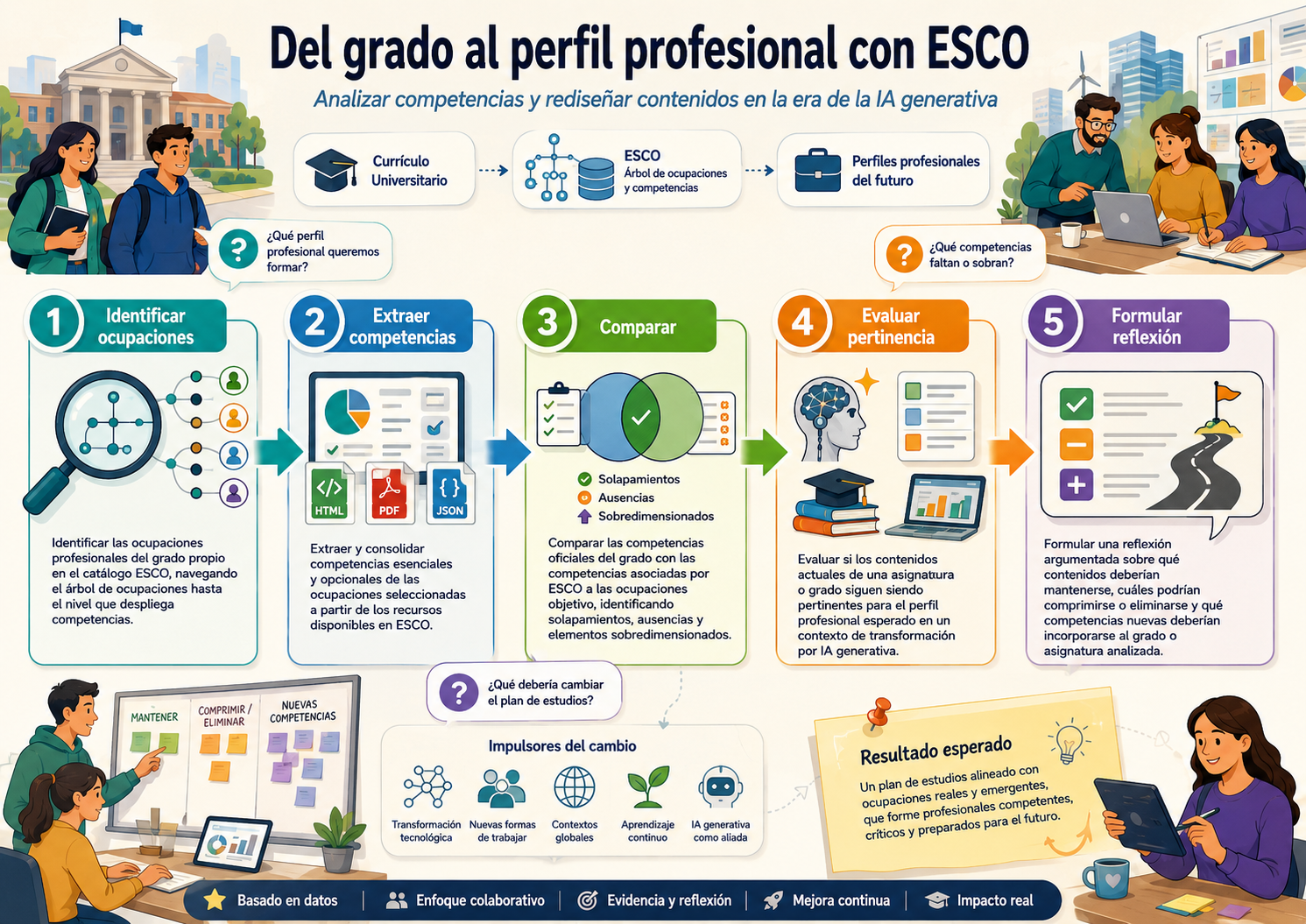
Que el mundo profesional ha cambiado en los últimos años está fuera de toda duda. La pandemia de COVID-19 y la irrupción de la IA generativa se han sumado a otros cambios que ya se estaban manifestando.
En este contexto, creo que es necesario replantear qué competencias/skills necesitamos formar en nuestros graduados. Quizás no sean necesarios cambios (lo dudo); quizás haya que añadir cosas nuevas; quizás algunas cosas hayan pasado a ser obsoletas. Pero no es trivial dar respuesta a las preguntas: ¿debemos actualizar la formación que ofrecemos? ¿en qué sentido?
Llevo casi dos años dándole vueltas a esto, pero aún no he logrado concretar un marco de trabajo. Entre otras cosas, estaba esperando encontrar alguna investigación que explicara cómo ha cambiado el trabajo profesional en algunas profesiones debido al teletrabajo y otras formas de flexibilidad, la inteligencia artificial generativa y demás condiciones actuales.
Hoy he decidido crearme un “framework” que no estoy seguro de que me lleve a buen puerto, pero lo comparto, lo intento poner en marcha y luego os comento si me ha funcionado o no.
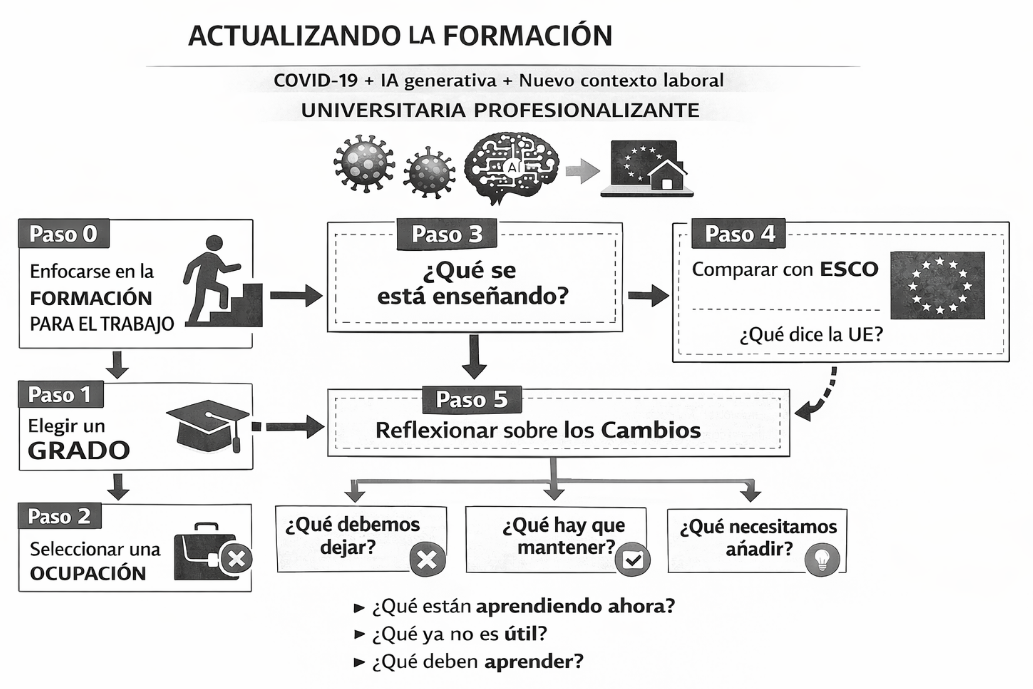
Paso 0. Decido centrarme en la formación para el trabajo y en ver las necesidades de la persona que usará lo aprendido para ser una profesional. Podría haber elegido otro enfoque, pero creo que este me va a resultar más sencillo y luego por abstracción intentar generalizar hacia otros perfiles.
Paso 1. Elegir un grado para centrarme en él.
Pensar en qué cambios son necesarios a nivel global me resulta demasiado complicado, ya que el impacto del nuevo contexto puede ser muy distinto en cada profesión. Igual luego no lo son tantos, pero me ha parecido más sencillo ir de lo particular a lo general que al revés.
Paso 2. Elegir una ocupación dentro de las que se suponen más comunes afines al grado y centrarme en ella, para luego ir abriendo el abanico a algunas ocupaciones parecidas y ver si hay cambios sustanciales.
Paso 3. Identificar cuáles son las competencias en las que estamos formando actualmente. Es un paso sencillo porque la “verdad” es lo que consta en las memorias de verificación de cada título.
Paso 4. Comparar el resultado del paso 3 con las propuestas oficiales de la Unión Europea.
yo he decidido usar como marco de referencia ESCO. Quizás haya otros marcos mejores, pero este es el que conozco y, en teoría, debería ser un marco sólido.
No obstante, las propuestas de ESCO están ancladas en el pasado. En el mejor de los casos, son buenas propuestas para hace 5 años y tendremos que reflexionar si siguen vigentes o no.
Paso 5. Integrar los resultados de los Pasos 3 y 4 y reflexionar sobre qué cambios son necesarios.
La parte de reflexión la tengo un poco débil. En un mundo ideal, donde las empresas supieran de verdad en qué ha cambiado realmente lo que sus profesionales necesitan, el informante relevante sería la empresa. Pero no estoy muy seguro de que haya alguna que tenga la certeza absoluta de qué es lo que realmente necesitan hoy, ni de qué necesitarán dentro de 5 años. Porque la IA generativa (que es el factor de contexto más influyente actualmente) está en pleno “hype” y poca gente puede tener certeza de dónde, cuándo y cómo va a acabar.
Independientemente de quiénes sean los informantes (ya conseguiré aclararme o usar “muestras de conveniencia” o pedir opinión a mis compañeros académicos para que hagamos el diseño desde nuestras “torres de marfil”), las preguntas clave son:
¿Qué están aprendiendo ahora?
¿Qué deberían dejar de aprender porque no es útil?
¿Qué cosas nuevas deberían empezar a aprender porque las necesitarán para ser buenas profesionales?
European Commission. Directorate General for Employment, Social Affairs and Inclusion. (2019). ESCO handbook: European skills, competences, qualifications and occupations. Publications Office. https://data.europa.eu/doi/10.2767/934956
I will be presenting this research at the upcoming XVII International Workshop ACEDEDOT – OMTECH 2026, taking place in Almería, Spain, from March 12-14, 2026:
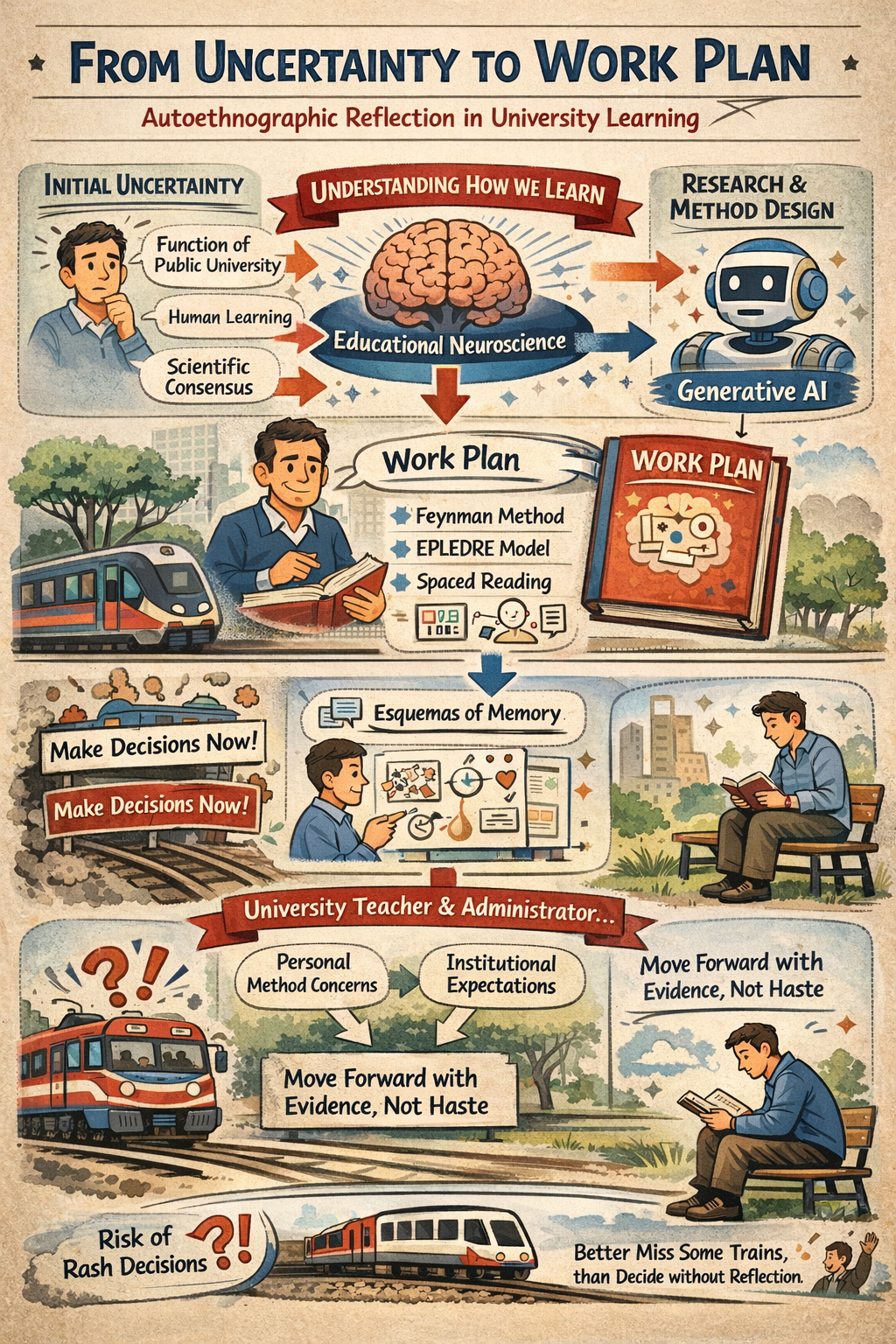
This communication presents an autoethnographic reflection. Building on four fundamental premises about the function of Spanish public universities and the established mechanisms of human learning, the author documents his personal journey from initial uncertainty to the design of a systematic work plan. The study focuses on understanding the current scientific consensus on how learning is consolidated in the brain and exploring the possibilities of generative AI to enhance this process in the university context. Drawing on the work of Héctor Ruiz Martín, a work plan is designed that combines recommendations from educational neuroscience with the Feynman method and the EPLEDRE model, including spaced reading, creation of sketchnote-type graphic schemes from memory, and public communication of the knowledge constructed. The communication shares the first graphic schemes developed and reflects on the author’s dual position as university teacher and administrator, facing both his own methodological uncertainties and institutional expectations for strategic guidance. It questions the “collective panic” surrounding the emergence of generative AI in universities and the pressure to make quick decisions without sufficient reflection. It proposes replacing reactive urgency with a deliberate process of calm, evidence-based reflection and pilot experimentation, recognizing that in contexts of accelerated change, it is preferable to miss some “trains” rather than make biased decisions under collective amygdala hijacking
(Proyecto de investigación del Vicerrectorado de Planificación, Estudios, Calidad y Acreditación de la Universitat Politècnica de València. Dirección de Area de Transformación Docente e Instituto de Ciencias de la Educación)
Mientras algunas personas debaten si prohibir o no “ChatGPT” en nuestras aulas, nuestros estudiantes ya lo usan. Porque muchas de las cosas que enseñamos, la IA ya las responde mejor y más rápido. Si no identificamos qué nos hace verdaderamente valiosos como profesorado universitario, corremos el riesgo de volvernos irrelevantes.
Planteo hacer una serie de entradas donde te contaré:
→ Entrada 1: por qué decidimos investigar esto y las preguntas que nos quitan el sueño
→ Entrada 2: qué dicen los estudiantes sobre lo que nos hace insustituibles (siete cosas que valoran y tres alertas rojas)
→ Entrada 3: qué propone el profesorado y hacia dónde vamos con este proyecto
Este proyecto no va de tecnofobia ni de tecnoeuforia. Va de preguntarnos qué deberíamos seguir haciendo, qué transformar radicalmente, y qué quizá dejar de hacer.
¿que emociones genera en ti cuando oyes “Inteligecia Artificial Generativa”? (50 profesoras-es, noviembre 2025)
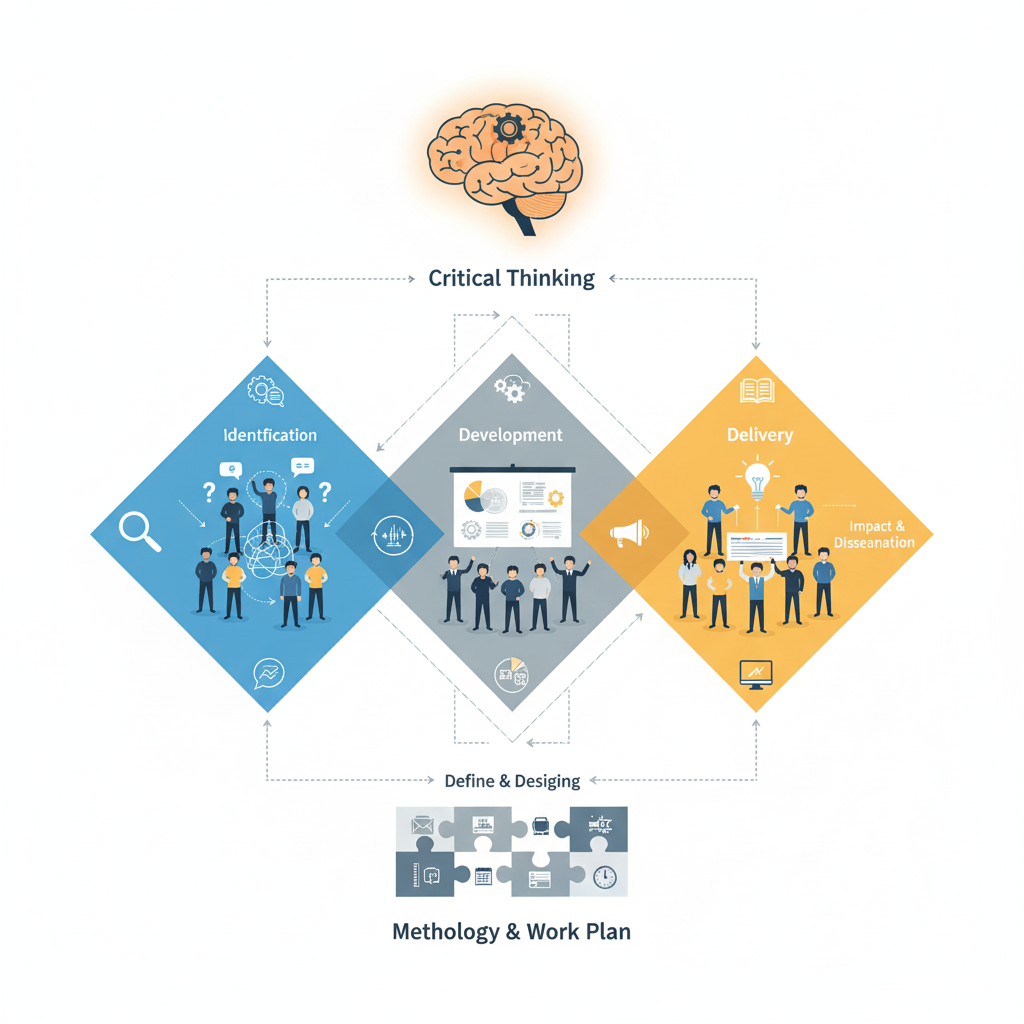
Extended Title: Action research on designing materials, protocol, and feasibility of a complex intervention to foster critical thinking and apply the triple diamond framework in group decision-making.
This project aims to enhance students’ critical thinking and decision-making skills by developing, testing, and refining a structured group decision-making framework called the triple diamond. It focuses on identifying misconceptions that hinder students’ use of this framework and improving pedagogical interventions through active, collaborative learning and evidence-based methodologies.
Project scope and participants: The innovation will be implemented across multiple courses in engineering, logistics, and business master’s programs, involving diverse student groups facing recurring difficulties in applying structured decision-making methods.
Problem identification: Students consistently rely on intuitive rather than structured approaches in group decisions, struggling to apply the triple diamond framework despite repeated instruction and practice. This issue is persistent and mirrors challenges observed in professional settings.
Theoretical foundations: The project integrates concepts of misconceptions, knowledge elicitation, threshold concepts, and decoding the discipline to reveal and address barriers to expert-like thinking in decision processes. It emphasizes the reorganization of knowledge fragments rather than the mere replacement of incorrect ideas.
Learning objectives: Students will learn to manage group decision processes using the triple diamond, define tasks and prioritization criteria explicitly, analyze innovation competencies, and develop reasoned, evidence-based reports, all enhancing critical thinking skills.
Methodology: The project employs active and collaborative learning through structured three-hour classroom dynamics complemented by autonomous preparatory work. It incorporates innovative visual case representations, reflective learning journals, and think-aloud protocols to elicit student thinking and identify misconceptions.
Expected outcomes: These include identifying common misconceptions, adapting and developing rubrics for assessment, quantifying students’ valuation of innovation competencies, improving decision quality and reducing cognitive biases, and evaluating the impact of different case presentation formats on engagement and critical thinking.
Work plan and tools: The two-year plan details tasks such as material development, rubric adaptation, protocol design, experimental validation, and dissemination through academic articles and conferences. Project management uses O365 tools with regular team meetings and quality control processes.
Evaluation strategy: Evaluation includes measuring the number and categorization of misconceptions, rubric validation, analysis of student preferences and clusters, transferability assessments, pre-post intervention comparisons, and engagement metrics using established models. Data collection involves think-aloud sessions, forum analyses, and observations.
Impact and dissemination: The project aims to improve teaching and learning by making decision-making processes transparent and evidence-based, enabling transfer across disciplines and formats, including MOOCs. Results will be shared via conferences, indexed publications, online platforms, and social media, ensuring broad accessibility and adoption.
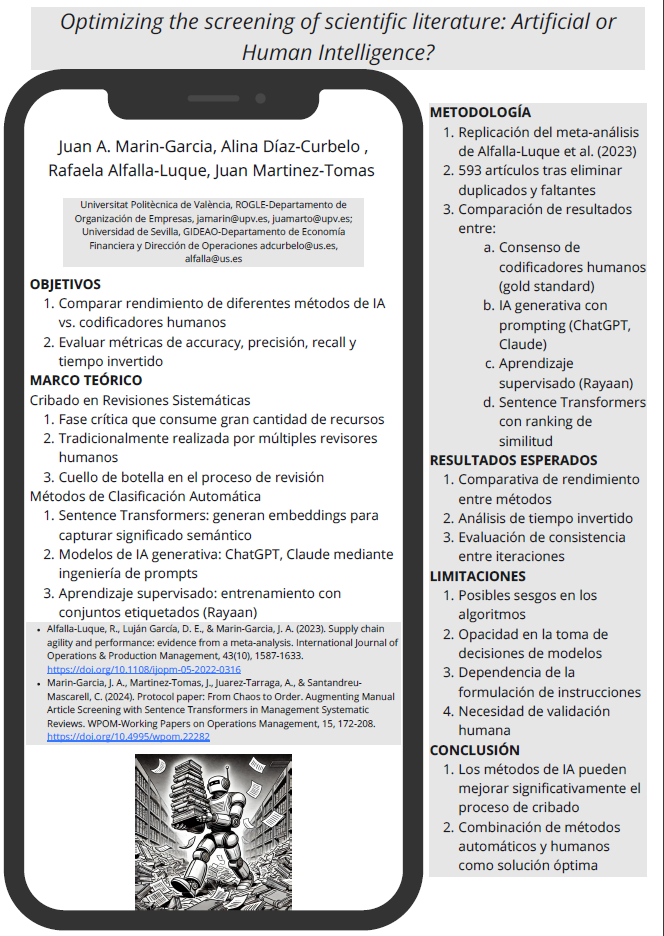
El 14 de marzo 2025, presentaremos nuestro trabajo Optimizing the screening of scientific literature: Artificial or Human Intelligence? en el XVI Workshop in Operations Management and Technology en Melilla. This paper analyses the use of artificial intelligence (AI) in scientific literature screening, comparing its performance with the consensus of human researchers. The objective is to evaluate three methods: 1) generative AI using chatbots such as ChatGPT and Claude; 2) supervised learning with the Rayaan algorithm; and 3) similarity ranking based on sentence Transformers embeddings, proposed by Marin-Garcia et al. (2024). The study aims to determine whether any of these methods reduce manual effort and improve efficiency metrics such as accuracy, repeatability and time spent. It will also investigate the generalisability of these models to different scientific areas and whether the integration of multiple models improves the consistency of results in complex texts.
Alfalla- Luque, R., Luján García, D. E., & Marin- Garcia, J. A. (2023). Supply chain agility and performance: evidence from a meta- analysis. International Journal of Operations & Production Management, 43(10), 1587-1633. https://doi.org/10.1108/ijopm- 05- 2022- 0316 Marin- Garcia, J. A., Martinez- Tomas, J., Juarez- Tarraga, A., & Santandreu-Mascarell, C. (2024). Protocol paper: From Chaos to Order. Augmenting Manual Article Screening with Sentence Transformers in Management Systematic Reviews. WPOM- Working Papers on Operations Management, 15, 172-208. https://doi.org/10.4995/wpom.22282
Marin-Garcia, J. A., Martinez-Tomas, J., Juarez-Tarraga, A., & Santandreu-Mascarell, C. (2024). Protocol paper: From Chaos to Order. Augmenting Manual Article Screening with Sentence Transformers in Management Systematic Reviews. WPOM-Working Papers on Operations Management, 15, 172–208. https://doi.org/10.4995/wpom.22282
What is it about?
This protocol paper describes a new method to help researchers screen and classify scientific articles more efficiently during systematic literature reviews. The authors propose using AI language models called “sentence transformers” to automatically analyze article titles and abstracts, comparing them to the review’s topic of interest. This helps researchers prioritize which articles to review first, rather than working through them randomly. The method was tested with 14 different AI models on a small set of articles about workplace management practices.
As scientific publications grow exponentially, researchers struggle to efficiently review all relevant literature. This method could: * Save significant time in the screening process * Reduce researcher fatigue and potential bias * Make systematic reviews more accessible to researchers with limited resources * Help democratize access to advanced AI tools for academic research * Support evidence-based management practices by making literature reviews more feasible The approach is particularly valuable because it’s designed to complement rather than replace human judgment, and can be implemented using free, accessible tools.
Perspectives
“
This protocol represents an innovative bridge between cutting-edge AI technology and traditional academic research methods. The authors’ commitment to making the tool freely available and easy to use for researchers worldwide, regardless of technical expertise or resources, is particularly noteworthy. The pilot results suggest promising potential, though more testing is needed to validate the approach at larger scales.
This page is a summary of: Protocol paper: From Chaos to Order. Augmenting Manual Article Screening with Sentence Transformers in Management Systematic Reviews, WPOM – Working Papers on Operations Management, December 2024, Universitat Politecnica de Valencia, DOI: 10.4995/wpom.22282.
Marin-Garcia, J., Andreu Andres, M., Atares-Huerta, L., Aznar-Mas, L., Garcia-Carbonell, A., González-Ladrón-de-Gevara, F., Montero Fleta, B., Perez-Peñalver, M., & Watts, F. (2016). Proposal of a Framework for Innovation Competencies Development and Assessment (FINCODA). WPOM-Working Papers on Operations Management, 7(2), 119-126. doi:http://dx.doi.org/10.4995/wpom.v7i2.6472
In this article we propose an innovation competence model of the people which is based on the existing literature to integrate and complement existing models. The main contribution of this work consists in demonstrating the differences and similarities of current models and in providing a conceptual definition for each model element. In this way, both researchers and people in charge of human resources in companies obtain a framework with which to design measuring instruments to assess innovation competence, which can fulfill the twofold demand of validity and reliability.
This work has been conducted as part of a European project financed by the European Union [“FINCODA” Project 554493-EPP-1-2014-1-FI-EPPKA2-KA] (http://bit.ly/FINCODA-EUsite01). (The European Commission support for the production of this publication does not constitute an endorsement of the contents which reflects the views only of the authors, and the Commission cannot be held responsible for any use which may be made of the information contained therein); and by the Universitat Politénica de Valencia PIME/2015/A/009/A “Evaluation of innovative behavior indicators in university students”.
Keywords
competence assessment; innovation; model; literature review
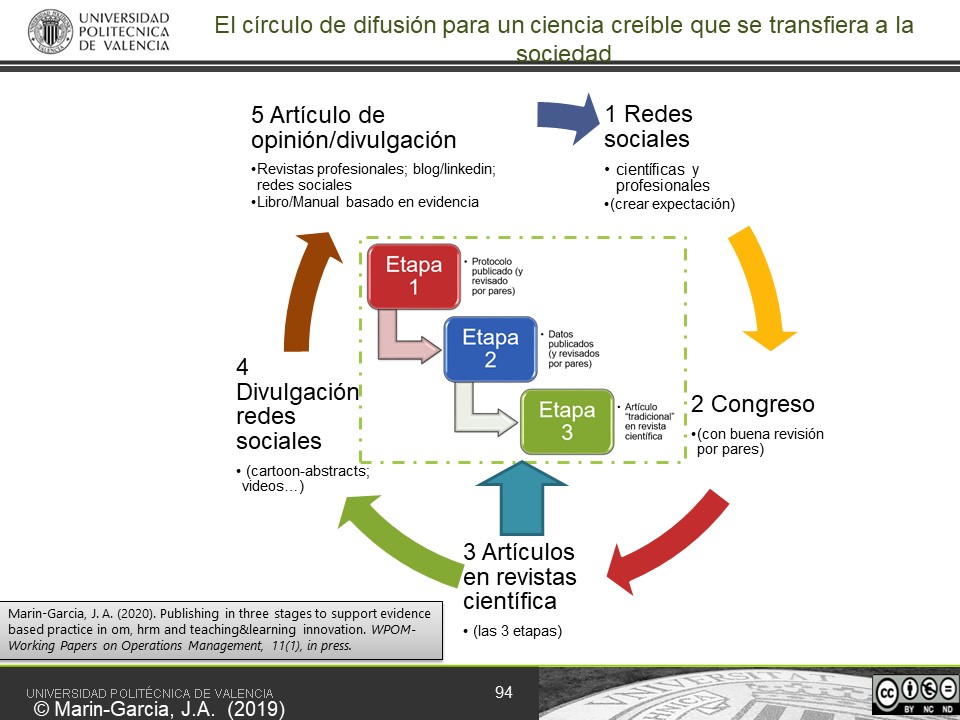
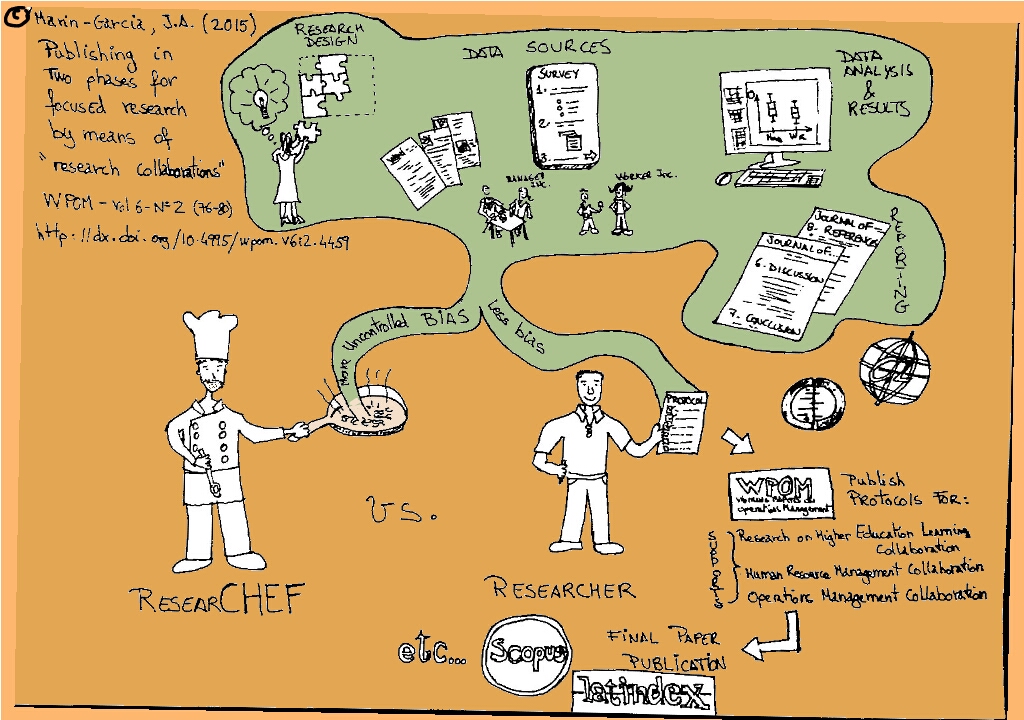
We present and justify a new way to research and publish. This proposal is not intended to substitute or replace traditional ways of doing science, but rather complement, filling a gap and providing an efficient way to achieve scientific advances. The process begins with the sending a proposal of protocol to WPOM. Proposals are evaluated in each of the collaborations, depending on the potential to fill a research niche in the area. In the case of accepted protocols, WPOM guarantees commitment to publish the article if the protocol and deadlines are met. Thus, researchers can develop their projects focusing on meeting the protocol that has been approved without the question of whether, once completed, research is relevant or if the methodology is correct.
—-
En este artículo presentamos y justificamos una nueva forma de investigar y publicar. Esta propuesta no pretende sustituir o reemplazar a los modos tradicionales de hacer ciencias, sino complementarlos, rellenando una laguna y ofreciendo un camino eficiente para lograr los avances científicos. El proceso se inicia con el envío de la propuesta de protocolo WPOM. Las propuestas se evalúan, en cada una de las collaborations, en función del potencial para cubrir un nicho de investigación en el área. En el caso de ser aceptados los protocolos, WPOM garantiza un compromiso de publicación del artículo si se cumple el protocolo y plazos prometidos en el proyecto. De este modo, los investigadores pueden desarrollar proyectos de escritura centrándose en cumplir el protocolo que ha sido aprobado, sin la incógnita de si, una vez terminada, la investigación es relevante o si la metodología es la correcta.